
Blake’s CFSS Participant Story
Participant Story
More and More Like a Little Boy
How one Minnesota family found CFSS, and what changed once they did.
Each morning starts with a board on the wall. Blake is up around six, and he works his way down the list, brushing his teeth, getting dressed, putting on his shoes, checking them off one at a time. Enough check marks earn an Oreo, which he has decided is a fair trade, and by the time the bus pulls up, he has already had a morning full of success.
Blake’s morning
Earned: one Oreo
He takes a look at the board, and he says, I know how to do this, this is super easy, I’m going get the Oreos. And then it’s an easy day.
Bia, Blake’s mother
Blake is seven. He has autism, and six months ago he was non-verbal. Now he communicates all sorts of things to his mother.
Back then, Blake spent his days in crowded daycare rooms. He came home wound up from hours of nobody having the time, or the training, to notice what he needed.
His mother, Bia, still remembers watching him enter the classroom and thinking the worst. He cried on the way in, every time. What she heard from the people caring for him was that her son was upset all day, that he had behaviors, and that nobody knew what to do about any of it.
I had no help. I could not stop working. It was terrible situation.
Bia
Bia didn’t know how to navigate the systems to find additional support for Blake. So when one of his teachers mentioned that grants were available, her first reaction was that it sounded too good to be true. She also assumed that the thing she needed most was not something anyone would fund, because what she needed was time with her son. “I need to teach my child,” she said.
Getting from that conversation to actual support took months. But Bia was proactive. She spent the wait teaching herself an entirely new vocabulary, working through a list of providers the county had given her, and reading everything she could find about what CFSS was and what a provider was for.
“I didn’t even know what I wanted,” she said. “I was like, what can I have? I don’t understand any of this.”
She chose Asura off that list because of what she found when she looked into the families Asura already served. Her first call with her Asura Advisor, Lucy, was scheduled for thirty minutes and ran closer to three hours. Bia ended it by asking to schedule another one, because there was still more she wanted to understand, and because Lucy was able to answer so many of her questions.
“It’s been very smooth,” she said. “She always emails me back, and she’s always communicating.”
With Asura’s help, Bia is now Blake’s paid support worker. She had been working full time as a healthcare provider, and the CFSS program let her cut her hours back and put that time into her son instead.
It’s such a blessing that I am able to finally be a PCA for him. Asura has been so helpful.
Bia
What that time looks like, day to day, is a great deal of repetition. Bia rebuilt the household around routine, starting with something as ordinary as sitting down at the table for a meal. Blake had never had a routine that held, so the table was a nightly negotiation, and she worked it one step at a time: asking him to carry his plate over, then his utensils, then to sit down with her.
She also taught him what to do with a feeling before it turns into a behavior: putting his hands together, breathing, and saying the words for what is happening. I’m mad. I need space. Help. At home now, she says, there are barely any behaviors left.
School noticed. One of Blake’s teachers wrote to Bia this fall to say the staff could not believe how much he had changed over the summer. He moves through his day on his own, to the library and back, and in class he raises both hands and waits his turn. He is not ready for every part of every lesson yet, but he sits with his peers, and he does well.
He’s becoming more and more like a little boy, and less and less like a diagnosis.
Bia
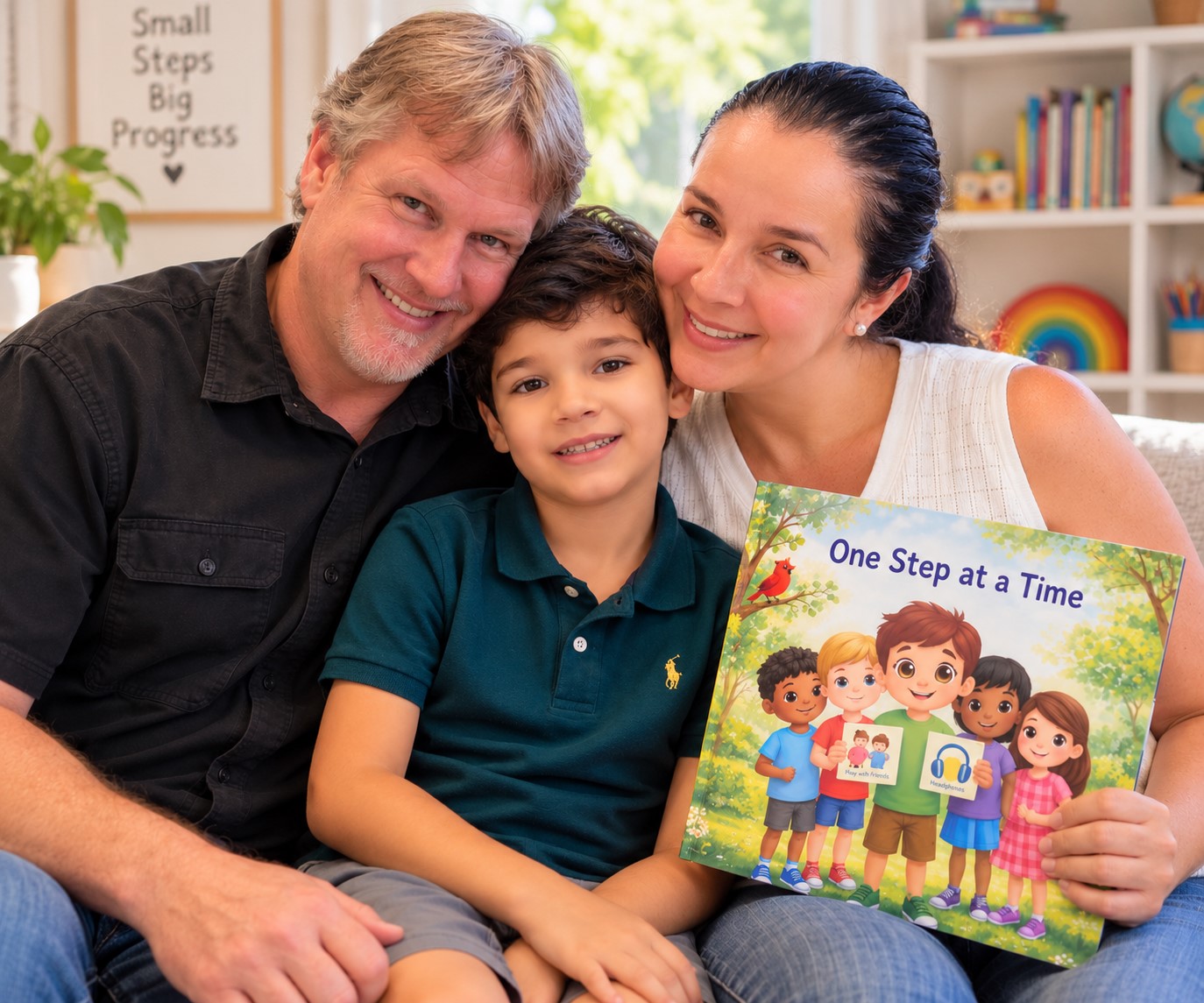
The book
Bia wrote a book about all of this, and one of the things she likes best about being home is that she finally gets to practice what she put in it. She wants it read by parents who are in a similar position to where she was, sitting with a diagnosis they feel ashamed of, or a system they cannot make sense of.
“It’s very important to have the diagnosis, so you know what you’re dealing with,” she said. “People should not be ashamed to go and get it. But a diagnosis doesn’t define your child.”
Bia’s advice to parents in a similar situation
“Go through the process, because once you’re in the process, you’re going to be able to help your kid better. You’re going to have that resource.”
Wondering whether CFSS could work for your family? An Asura Advisor can walk you through it.